Lecture Abstract
The Depth from Defocus (DFD) imaging technique is used for measuring the size and number density of spherical particles in a dispersed two-phase flow. Typical application examples include the measurement of liquid sprays[cite: 1].
The presentation will summarize the working principles of the DFD technique and explore its limits in terms of particle size bandwidth, number density, and measurement volume[cite: 1]. Two main approaches for processing the images will be discussed:
- The first approach utilizes not only the gray level of the blurred, out-of-focus images, but also the gradient of the gray level normal to the nominal particle contour[cite: 1].
- The second approach is based on a masked, regional convolutional neural network (R-CNN)[cite: 1].
These approaches are validated and evaluated using a dedicated apparatus in which particles of known size can be systematically varied in terms of number density and degree of out-of-focus[cite: 1]. The presentation concludes with recent developments for advancing the technique to size non-spherical particles[cite: 1].
Distinguished Speaker
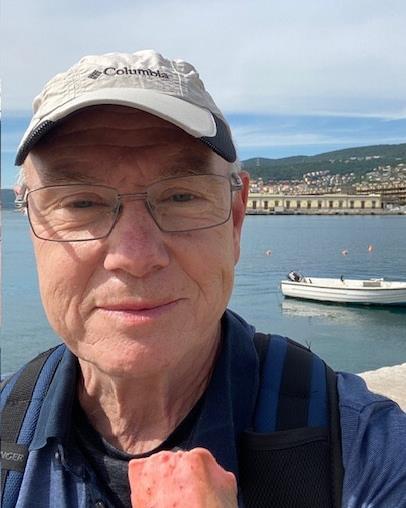
Prof. Dr.-Ing. Cameron Tropea
Prof. Dr.-Ing. Cameron Tropea graduated in Engineering Sciences from the University of Toronto (M.A.Sc. 1977)[cite: 1]. He earned his Dr.-Ing. at TU Karlsruhe (1982) and his Habilitation at the University of Erlangen-Nürnberg (1991)[cite: 1]. In 1997, he was appointed Head of the Institute of Fluid Mechanics and Aerodynamics at Technische Universität Darmstadt[cite: 1].
He served as Editor-in-Chief of Experiments in Fluids (2003–2025), Director of the CSI Excellence Cluster (2007–2014), and a member of Germany's Council of Science and Humanities (Wissenschaftsrat, 2016–2022)[cite: 1].
Prof. Tropea previously held the Henry Ford Visiting Professorship Chair at IIT Madras and a VAJRA Faculty position at IISc Bangalore (2020–2025)[cite: 1]. He is currently Visiting Faculty at IISc Bangalore, IIT Madras, and Shanghai Jiao Tong University[cite: 1].
Cordially Invited
All faculty members, research scholars, students, and interested colleagues are cordially invited to attend this expert lecture.